Torque + Bolting


RAD Torque Systems reaction arms
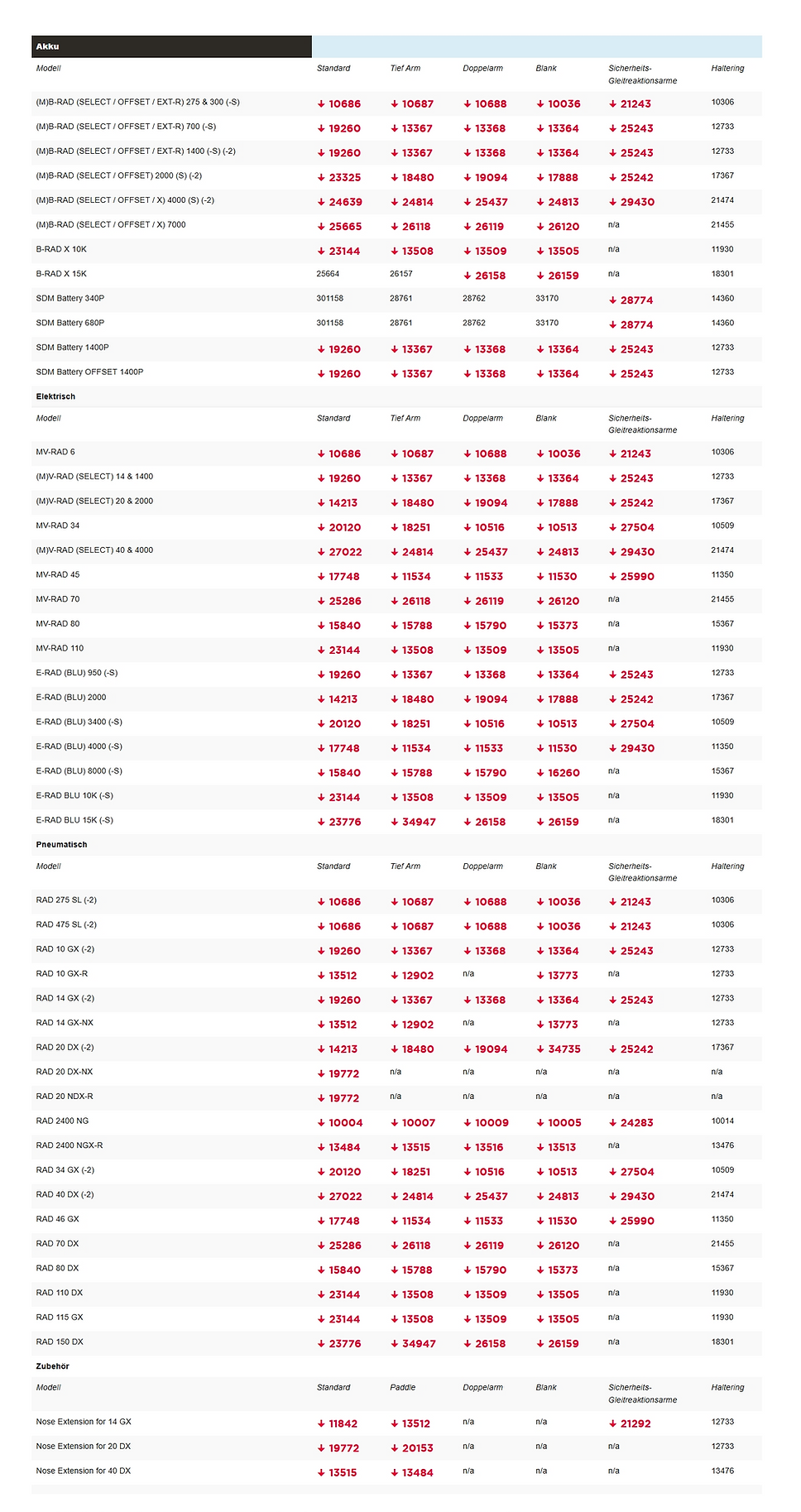
The RAD Torque reaction arms are the most important safety and functional component in high-torque screwdrivers.
Because RAD screwdrivers rotate continuously and generate enormous forces, the reaction arm absorbs the resulting counterforce on a stable counter surface (e.g., a neighboring nut or the housing) and prevents the torque from being transmitted to the operator.
Each tool kit includes a suitable support as standard. However, RAD Torque Systems offers a variety of specialized designs for different industrial applications:
The most important types of reaction arms
Standard (Angled Arm):
The classic, slightly angled support. It is used for standard flanges and exposed bolted connections where the nearest mating surface is close.
Deep Socket Arm:
Specifically extended for use with deep impact sockets. It ensures that the support point remains at exactly the same height despite the long socket. 90° /
Straight Arm:
Runs at a right angle or straight to the tool housing. Ideal for tight spaces or applications requiring vertical support downwards or upwards.
Double Ended Arm:
It has two opposing support surfaces. This allows work in both directions of rotation (tightening and loosening) without having to reposition the arm.
Sliding Reaction Arm (Movable Support):
Perfect for standardized hole patterns such as those found on pipe flanges. The support slides on a rail, adapts precisely to the bolt spacing, and almost completely eliminates pinch points.
Blank (welding blank):
An unhardened steel arm without a fixed geometry at the end. Customers can cut this blank to size themselves or weld on special parts to adapt it to a specific machine.


Of course, we can also supply reaction arms specifically tailored to your requirements with our engineering services - please contact us.